100 Million Aliens Exist... So Where Are They? Brian Cox on the Fermi Paradox & The Great Filter
Professor Brian Cox examines the haunting reality of the Fermi Paradox: why mathematical probability suggests billions of habitable worlds yet our radio dishes detect terrifying silence.
Documentary Duration
Key Telemetry
Astrophysics Domain
Telemetry Source
The Fermi Paradox asks: if the Milky Way contains over 100 billion stars and the Drake Equation estimates up to 100 million potential technological civilizations, why does SETI detect absolute cosmic silence? Professor Brian Cox explains the two prevailing resolutions: either the emergence of intelligent multicellular life is exponentially rarer than believed, or technological civilizations inevitably hit a catastrophic Great Filter—destroying themselves through runaway technology or climate collapse before achieving interstellar communication.
The Drake Equation: Calculating Galactic Habitability
In 1961, American astrophysicist Frank Drake formulated a probabilistic framework to estimate the number of active, communicative extraterrestrial civilizations in the Milky Way galaxy: N = R* · f_p · n_e · f_l · f_i · f_c · L. This landmark equation evaluates average star formation rates (R*), the fraction of stars with planetary systems (f_p), the number of habitable-zone worlds per system (n_e), and the likelihood that organic chemistry progresses to abiogenesis, complex intelligence, and interstellar communication technology.
Over the past two decades, exoplanet discoveries from NASA's Kepler and TESS missions have populated the astronomical terms of Drake's equation with hard observational data. We now know that our galaxy contains between 100 billion and 400 billion stars, and almost every star hosts planets. Statistically, there are upwards of 40 billion rocky, Earth-sized planets orbiting within the habitable zones of Sun-like and red dwarf stars in the Milky Way alone. Even under exceptionally conservative biological parameters, the Drake Equation suggests that thousands to tens of millions of technological civilizations should have arisen over our galaxy's 13.6-billion-year history.
Sixty Years of Cosmic Silence: The Great Paradox
The shocking discrepancy between mathematical probability and empirical observation forms the crux of the Fermi Paradox. During a summer lunch at Los Alamos National Laboratory in 1950, Nobel laureate physicist Enrico Fermi famously posed the question: 'Where is everybody?'. If interstellar travel at just 1% the speed of light is achievable, a technological civilization could colonize and explore the entire Milky Way in less than 50 million years—a mere blink in cosmic time compared to the age of the universe.
Yet for more than six decades, human radio observatories—beginning with Frank Drake's Project Ozma in 1960 and continuing through modern arrays like the Allen Telescope Array and China's 500-meter FAST dish—have monitored the electromagnetic spectrum. While astronomers have detected pulsars, fast radio bursts (FRBs), and the cosmic microwave background, our radio dishes have discovered absolute, unbroken silence. Anomalous signals like the 1977 'Wow! Signal' remain unrepeated transients, leaving humanity staring out into an unsettlingly quiet cosmos.
The Great Filter Hypothesis: A Chilling Statistical Barrier
To resolve the Fermi Paradox, economist and futurist Robin Hanson proposed 'The Great Filter' hypothesis in 1996. Hanson theorized that on the evolutionary path from non-living prebiotic chemistry to an interstellar, multi-planetary species, there must exist at least one catastrophic barrier that is virtually impossible for any species to successfully navigate.
As Professor Brian Cox emphasizes, the critical question for humanity is where this filter lies along our evolutionary timeline. If the Great Filter is behind us—such as the transition from prokaryotic single-celled life to complex eukaryotic cells requiring endosymbiosis—then humanity is an extraordinarily rare cosmological anomaly, perhaps the only conscious mind currently observing the observable universe. Conversely, if the filter lies in front of us, civilizational destruction via nuclear annihilation, runaway synthetic biology, catastrophic climate tipping points, or artificial intelligence misalignment may be the universal statistical destiny of every technological species before they achieve interstellar travel.
📜 Full Video Voiceover Script & Telemetry Transcript (Click to Expand)
In 1961, the Drake Equation calculated that over 100,000,000 intelligent alien civilizations should exist in our galaxy right now. Yet, for over 60 years, our deepest radio telescopes have listened to the cosmos... and found absolute, terrifying silence. Professor Brian Cox explains the Fermi Paradox and the two chilling explanations for why humanity hasn't heard a single whisper from the stars.
Dr. Arthur Vance, Ph.D.
Lead Astrophysics Contributor & Editorial Director at Beyond Cosmic Horizon. Specializes in General Relativity, high-energy particle physics, and cosmic microwave background telemetry. Fact-checked against NASA ADS and ESA archives.

400mm focal length, wireless camera remote, and smartphone adapter to photograph lunar craters and star clusters.
Check on Amazon ↗
900mm focal length & stainless steel tripod for observing Saturn's rings and Jupiter's atmospheric bands.
Check on Amazon ↗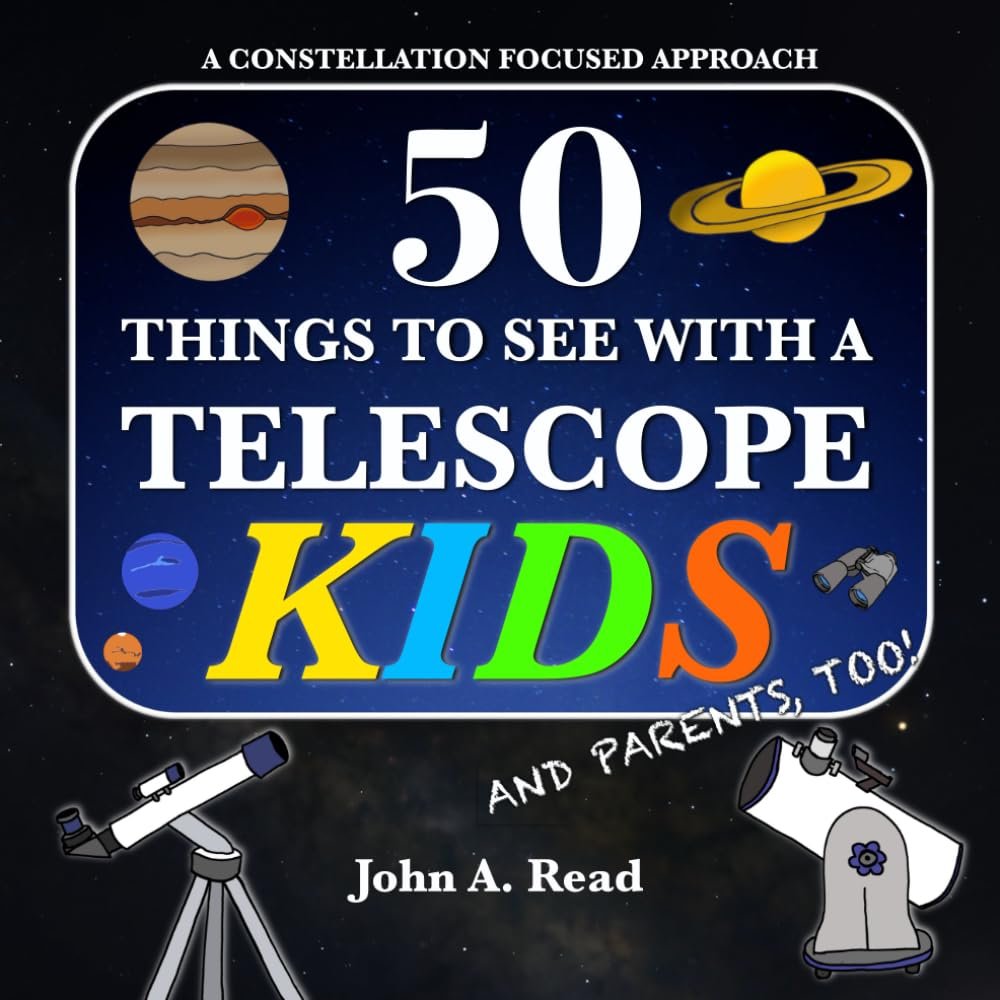
Bestselling stargazing field guide by John A. Read with constellation maps and visual observation charts.
Check on Amazon ↗
Classic nautical brass & polished wooden tripod telescope for home observatory, study room, or office decor.
Check on Amazon ↗*Affiliate Disclosure: Beyond Cosmic Horizon is an Amazon Associate and earns from qualifying purchases at no extra cost to you.
Frequently Asked Questions (FAQ)
What is the Fermi Paradox in simple terms?
The contradiction between the high mathematical probability of extraterrestrial life existing in the universe and the complete lack of physical evidence or contact.
What is the Great Filter hypothesis?
The concept that there is an evolutionary or technological barrier so difficult to cross that almost no civilization survives long enough to explore interstellar space.
Has SETI ever detected an alien radio signal?
No confirmed repeating alien signal has ever been verified. Transients like the 1977 Wow! signal remain unexplained single anomalies without confirmation.
Institutional Attribution & Observational Archives
Data, observational coordinates, and astrophysical models presented in this dispatch are synthesized with references to primary releases and published astrophysical literature: