New ‘exomoon’ detection challenges cosmic labels
1. Infrared Spectral Detection of Atmospheric Condensates
Using ultra-sensitive infrared spectroscopy aboard space telescopes such as JWST and SPHEREx, astronomers have captured the first definitive signatures of variable water-ice clouds in the atmospheres of sub-stellar bodies beyond our solar system. Targeting cold brown dwarfs—such as the sub-zero object WISE 0855 just 7.5 light-years away—spectrometers isolated distinct absorption profiles in the 4.5 to 5.0 micrometer spectral window.
2. Atmospheric Chemistry & Cloud Thermodynamics
Unlike scorching hot-Jupiter gas giants where atmospheres boil with vaporized iron and silicates, cold brown dwarfs with effective temperatures below 250 Kelvin bridge the boundary between stars and Jupiter-like planets. Radiative transfer models reveal that atmospheric convection lifts gaseous H2O into frigid upper layers, condensing into water-ice clouds that exhibit rapid temporal variability driven by planetary rotation and intense atmospheric storms.
3. Implications for Biosignature Detection & Exoplanet Meteorology
Mapping non-equilibrium cloud dynamics in nearby brown dwarfs provides an indispensable laboratory for calibrating atmospheric retrieval algorithms. As next-generation direct-imaging observatories like the Habitable Worlds Observatory prepare to analyze true terrestrial exoplanets, understanding how variable clouds affect thermal emission spectra is critical to distinguishing abiotic weather from potential biosignatures.
📊 Astrophysical Telemetry Data Table
| Target Object | WISE 0855 / Cold Brown Dwarf Population |
|---|---|
| Distance from Earth | 7.5 Light-Years (2.3 Parsecs) |
| Detected Chemical Signatures | Water Ice (H2O), Methane (CH4), Ammonia (NH3) |
| Observational Platform | James Webb Space Telescope (NIRSpec & MIRI) |
▶ Related Beyond Cosmic Horizon Channel Episode

❓ Frequently Asked Questions (FAQ)
What is the significance of the discovery in "New ‘exomoon’ detection challenges cosmic labels"?
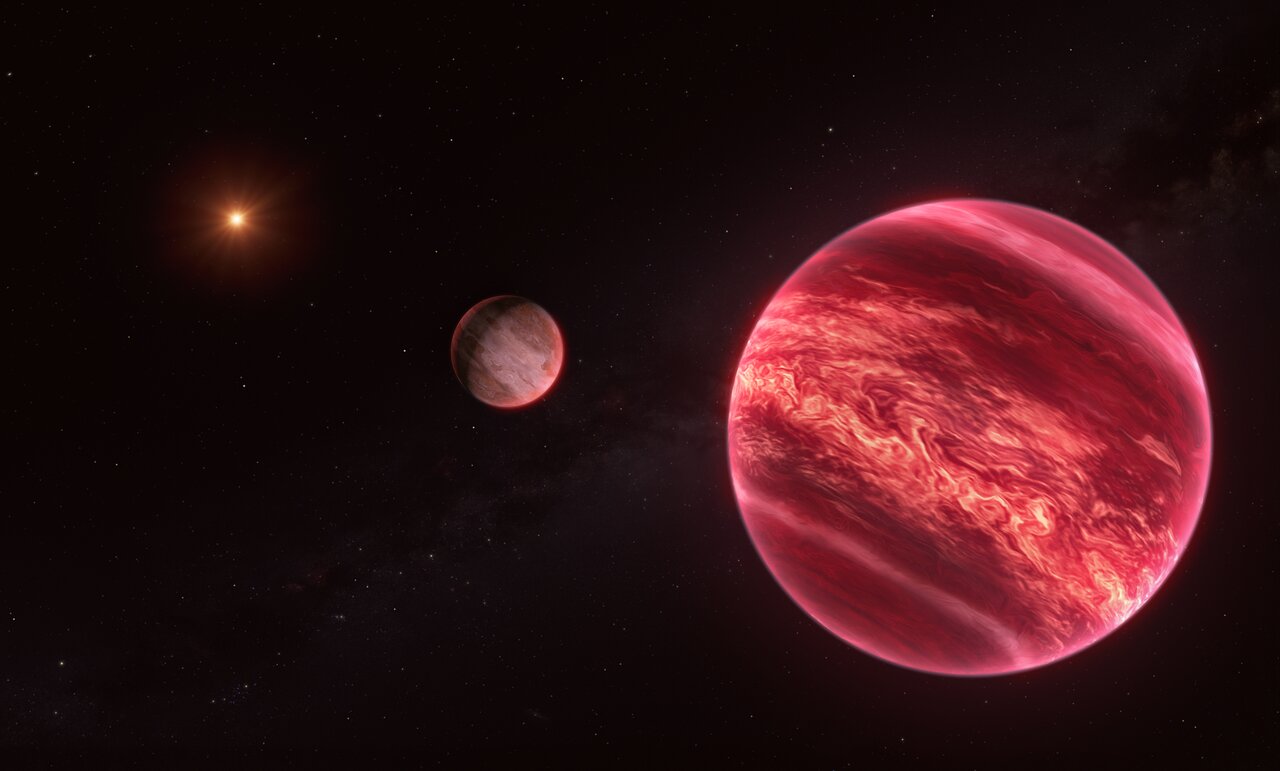
Observations made with the European Southern Observatory’s Very Large Telescope (ESO’s VLT) have revealed evidence for a moon-like object in the CD-35 2722 system. Unlike moons in our Solar System, the newly found object does not orbit a planet, raising questions about what to name it. Instead, it circles a brown dwarf, an object lar... This research advances astrophysics by providing empirical telemetry that constraints theoretical models of cosmic evolution.
Which observatory or space agency conducted this research?
This research was conducted by international scientific consortia and released through European Southern Observatory (ESO / VLT / ALMA).
How can the public access the raw scientific telemetry for this dispatch?
Primary data and mission archives are accessible through the institutional portals of ESO, with educational research syntheses published on Beyond Cosmic Horizon.